Munafo's Marriage Initiation Ritual

Our Monogram
Contents
This page presents the syllabus for a marriage initiation ritual (a.k.a. "wedding ceremony"), written for use by opposite- or same-sex partners. I developed this for use in my own actual wedding, but also intend it to be available for others to adapt and use as they wish.
Therefore, in case I don't make it obvious, you should feel free to change individual elements (such as music choices, order of activities, etc.) to suit your own situation.
Details of the ritual (in particular the celebrant's words) were developed in collaboration with Dorry Bless, of Circle Of Life Ceremonies, who I can recommend to others interested in distinctive ceremonies in the PA/NJ/NY area.
Explanation of Format
Font and style variations are used to convey different types of information, as follows:
| Style | Used For |
| plain text | Anything that is to be said verbatim. |
| [text in brackets] | Ideas to be spoken, but paraphrased to suit the grammatical style of the speaker. |
| (text in parentheses) | "Stage directions": Instructions for movement and general comments about what is happening. |
| {text in curly braces} | Curly braces are placed around editorial comments, and notes regarding how this ceremony should be personalised for the specific couple being wed and their community. |
| Bold Face Text | Descriptive text that will be included in the printed program distributed to guests. |
| music cue: Title (Comment) (artist credits) [1:23] | All audio material is shown this way, including any intentional periods of silence. These items also go into the program and cue sheet. |
Master, Derivative and Auxiliary Documents
This document is a "master" containing information from which two derivative documents can be produced: a program for the guests, and a cue sheet for the celebrant, photographer and sound system operator. It is also anticipated that customized scripts for the celebrant and wedding party members could be created, if such a thing were desired.
In addition, auxiliary documents are provided as appendices. These contain material of interest to specific parties, such as the team responsible for the tent and chairs.
Program
The program is a guide for the guests to keep track of the progress of the ceremony, and gain insight into the symbolic significance of certain ritual elements. It is produced from this document by eliminating many of the script items: Spoken and paraphrased lines and most of the stage directions. The music cues and bold text are included in the program.
Cue Sheet
The cue sheet is a special list of musical selections (including intentional periods of silence) that serves as a script for use by the person running the sound system. It also includes some of the (parenthetical text) indicating stage directions, and purpose of each part of the ceremony. Copies should also be provided to the celebrant and the photographer, to give them an idea how long they will have to perform their roles during each "scene" of the ceremony.
Preparatory Work
In addition to the dozens or hundreds of things on an ordinary wedding planning checklist, the following special considerations apply to this ceremony:
[_] A rehearsal event of some type (such as the typical "rehearsal dinner") is essential.
[_] Invite at least 5 men and 5 women to the rehearsal event, to serve as archetypes (explained below). Prepare them in advance for the idea that they might be speaking a sentence that expresses a generic characterization of certain desirable personality traits.
[_] Copy this text into new documents, and edit out the parts that are not needed, to produce a script for the celebrant and cue sheets for the photographer and sound engineer. You can also use this text as source material for the printed program.
[_] Prepare index cards for the archetypes to use, and have them ready before the rehearsal event. Each should have the spoken line that they speak, and instructions for when and how they enter (see below). It may help to have two copies of each card, and leave the second copy in the person's position (where they will be sitting or standing during the ceremony) so they don't have to worry about losing their card.
[_] At the rehearsal event, decide which people will be each archetype. I suggest letting the women have a little discussion amongst themselves to do this, and likewise for the men. They may want your input, that's fine, but it's also nice to let them each choose one they identify with well.
Physical Setup
There are 11 people in the wedding party: the celebrant, the couple being married, and eight archetypes.
These people will all sit and/or stand in various positions inside an open circular space, with the boundary of said space being the guests, who will be sitting in chairs arranged around all sides of the circle, in four "quadrants" with aisles in between.
In the center of the circle is the celebrant and (eventually) the couple to be married.
The archetypes, representing aspects of human personality, are placed in four directions which can be thought of as "east", "south", etc.
This drawing shows the basic idea of the circular seating plan and placement of "archetypes":
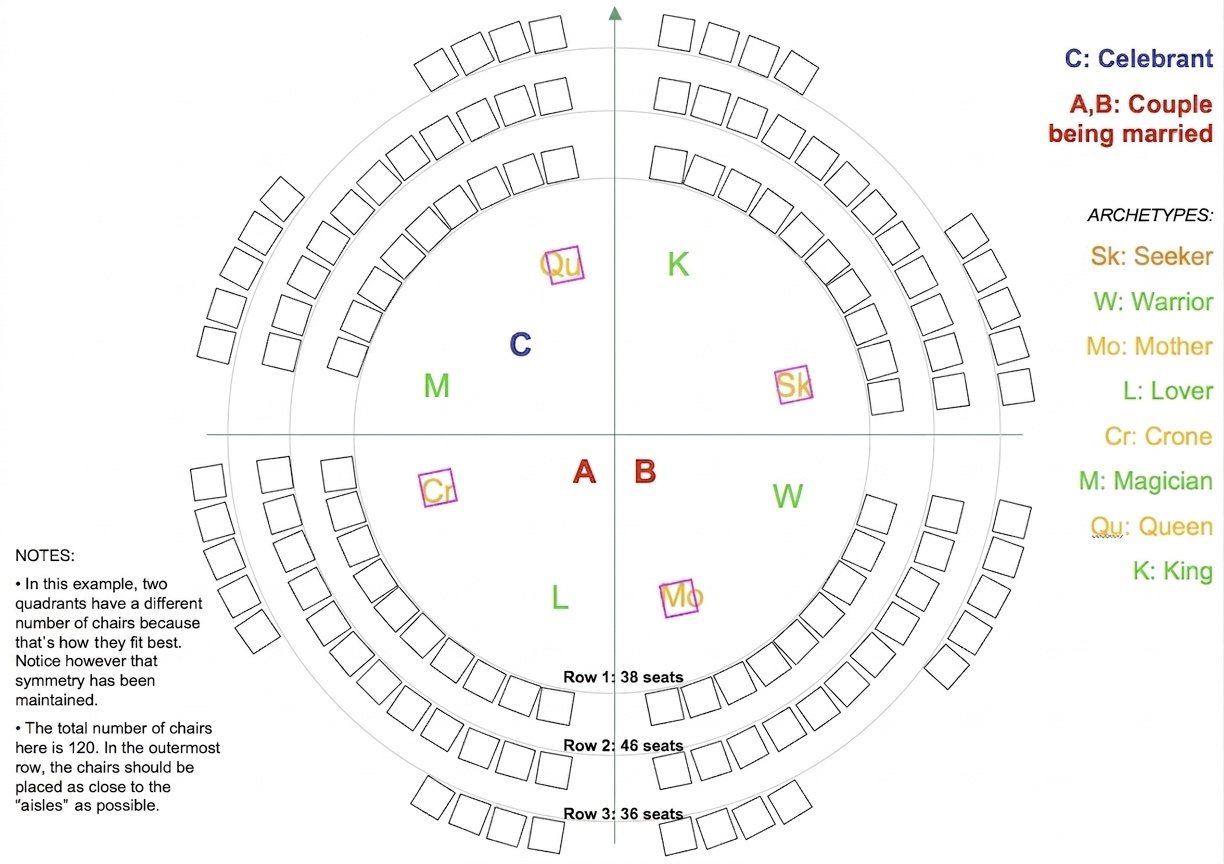
Figure 1: Arrangement of Archetypes and Guest Seating, Unconstrained Space
(PRODUCTION NOTES: A drawing that includes measurements and instructions on how to arrange chairs in a circle (Appendix B), should be provided to the team responsible for chairs.
"North", "east" and so on here are symbolic directions only. If outdoors with plenty of room, "north" will actually be to the north. If under a tent or some in other more constrained space, the "east-west" directions will be aligned with the LONGER dimension of the space (see figure 2 below).
In addition, standard wheelchair-width clearance should be provided in all places a person would need to travel in order to walk around the outside of the entire seating array; enter and leave any aisle, and to get past any of the four pairs of archetypes. One should be able to pass them on any desired side — left or right, behind or in front.
To accommodate this, it may be necessary to have (for example) only one complete circle of chairs; the remaining chairs being placed in curved arcs (in the symbolic "east" and "west" as just described — although these will probably not be the actual directions of east and west.) See figure 2 below.)
Constrained Space: If there is insufficient space in all directions to place all of the seats in concentric circles, the seating will be adjusted to accommodate. In this situation the archetypes should be placed so that "east" and "west" are the sides that have most of the seats. This means the fiance(e)s walk past most of the guests as they enter; the majority of the guests will see the couple being married from the side while they face the celebrant, and they see one of them from the front when they face each other:
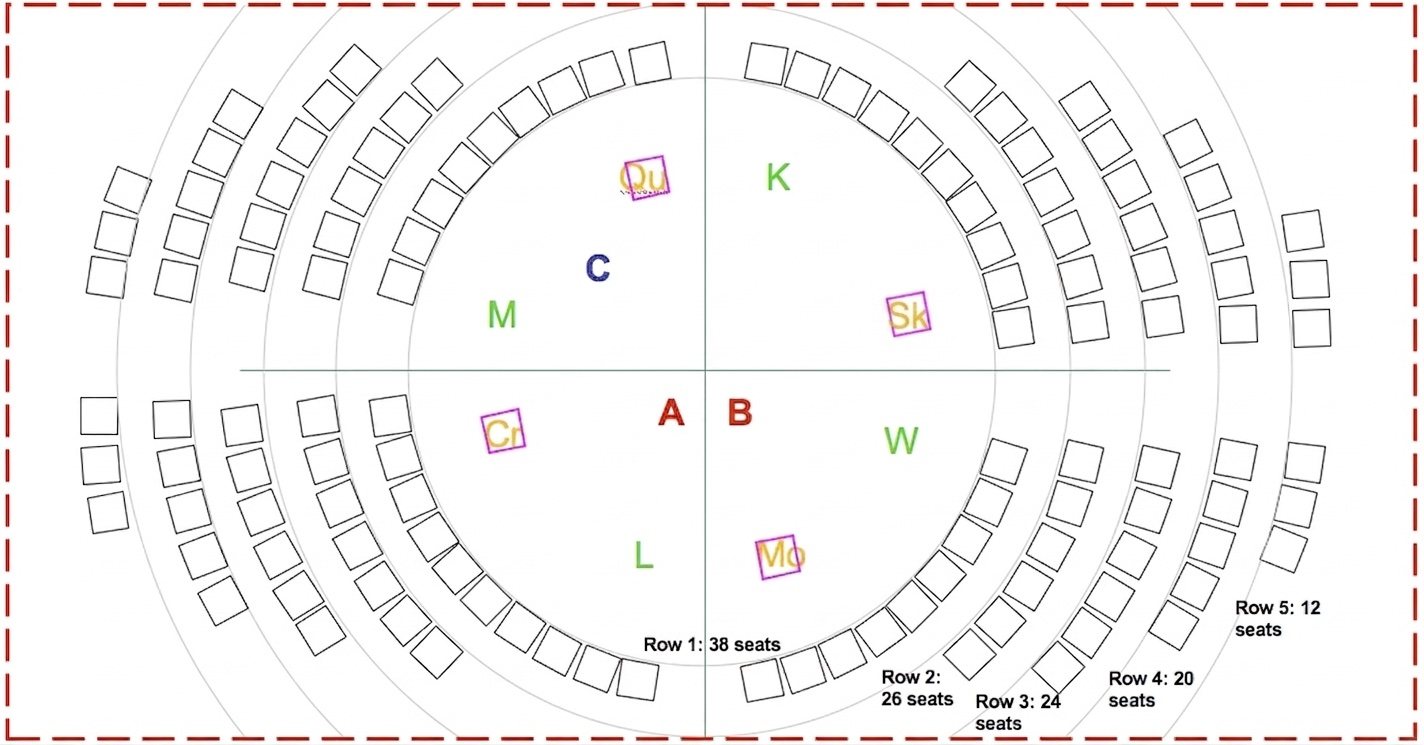
Figure 2: Arrangement for Rectangular Constrained Space
If there is a desire for guests to be seated according to which fiance(e) they are related to, this can be done by placing one "side of the family" in the seats in the "northeast" and "southeast" quadrants (the right half of figures 1 and 2), and the other guests in the other two quadrants. By doing this and following the processional as written (below), the fiance(e)s will be entering from the east and west, so each will be entering from "their part of the community".
Symbolism of the Physical Layout and Timing of Processional
The site (preferably outdoors, where one can see elements of nature that the couple admire, e.g. wetlands, mountains, etc.) represents all of creation, the world we live in, and the ages of past history in that the site existed before the guests arrive.
The guests represent humanity, and more specifically the community of the couple being married, and that community's history. The guests are in place before the archetypes arrive.
Positioned inside the "community" are the various archetypes — dimensions of mature personality, of both feminine and masculine nature. The archetypes are in place before the fiance(e)s arrive.
Within the archetypes, the fiance(e)s (persons to be married) enter and travel in a clockwise direction some way around the circle. This represents their separate life-journeys, contained within their community, and existing within the context of the mature personality dimensions (see the books in the bibliography, specifically Moore/Gillette and Conway, for descriptions and examples of how people develop and experience archetypes during their life-maturation process). This symbolic life journey occurs before the couple meet.
After "journeying" for a period of time, the couple then walk toward each other and meet. This represents the formation of their relationship. Moving to the center of the circle reflects a symbolic achievement of balance by bringing their (almost certainly different) character strengths together. In the center of the circle, all eight personality attributes are felt with equal strength. The meeting occurs before the initiation of marriage (wedding ceremony).
After all of this physical (A surrounds B) and temporal (A precedes B) context is established, the remainder of the ceremony proceeds along chronological lines. The ceremony outlined here contains elements used in many different cultures, arranged to follow the history of the couple —
- Recognition of their origins, (e.g. honoring past and/or elder family members)
- Outlining the story of their relationship's origin and development,
- Asserting their individual commitments, (acknowledging the significance of such a commitment and their ability to make the decision).
- Asserting mutual commitment, (vows, rings)
- Declaring the marriage,
- A blessing for the future.
Note in all the following, generic stand-in names are provided. This ceremony design is equally applicable to same-sex unions.
The Marriage
of
Ann Baker and Charles Davis
Ellis Field
Great Hampton, Indiana
Saturday, July 8, 2009
Introduction and Background
This ceremony is designed to reflect two principles: development over time (the world came first, followed by community, followed by the recognition of the qualities represented by the archetypes, followed by marriage) and the dependency of each of these on those preceding it, which is reflected by physical placement (the archetypes surround the couple; the community surrounds the archetypes; and the world surrounds everything).
The order of each part of the ceremony reflects these prerequisites: before there is marriage there must be a world, then a community, and then a culture of desirable human qualities, and then ancestors and parents, and then the relationship, and then the support of the community.
Officiating
Celebrant Dorry Bless
Parents of Ann
Dave and Barbara Baker
Parents of Charles
Charles and Ellen Davis
The Wedding Party
Archetypes
Phyllis Cooper
Leslie Daniels
Maria Estevez
Wendy Fergusen
Archetypes Antonio Gonzalez
Brad Hubert
David Ianocci
Harry Jensen
Readings Dave Baker
Fred Davis
Music Donald Jackson
The Ceremony
— — -- music cue: Various Energizing Rock and Popular Music (m: U2, Pat Benatar, The Who, Beatles, etc.) [roughly an hour total]
(A selection of rock and/or popular music that will keep people energized as they work. It needs to be selected with the wedding couple in mind: All pieces should appeal to them, and have positive messages in their lyrics: no breakup songs, no matter how good the guitar riffs are.)
The intention here was to keep people energized, and gradually transition into the material in the following set. The selection of music reflects my childhood as well as my fiancee's and our tastes in popular, energetic music.
SOUND OPERATOR: (Begin playing from this setlist when your setup is ready to go. You can also have it automatically play. You need to find out how much time there is before guests will start to arrive, and be ready to skip ahead to the next set list when that time arrives.)
(Here is the music I selected for use in my wedding)
Music selections given as an example only
|
1 : Tracks marked with "*" have been edited down a bit from the original, mainly by deleting soft intros or silence at the end.
— — -- music cue: Various Classical Pieces (m: Bach, Mozart, Beethoven, etc.) [roughly 30:00 total]
(A selection of classical pieces will be provided to the sound operator, which can be played in any appropriate order, and serve as background music as the guests assemble in the ceremony area)
This sequence of music was inspired by such things as WaterFire Providence, and reflects my taste in music, an upbeat mood and a sense of timeless significance.
SOUND OPERATOR: (Begin playing from this setlist at the time designated by the event manager, best man or whoever is in charge of when the guests start to be let in to the ceremony area. After you begin the setlist, find out how much time there is before the ceremony will start, and at an appropriate opportunity, skip ahead to a track that will allow the remainder of the set to be played. To aid in this, each track in this list indicates (in the final column "Countdown to End") how much time it will take to finish the set starting with that track.)
(Here is the music I selected for use in my wedding)
Music selections given as an example only
|
— — -- music cue: 1 minute of silence [1:00]
(This is intended to give the guests the impression that something "might" be about to happen.)
(Alternately, if desired the Celebrant can step into the circle and inform the guests that we are about to start, ask them to turn off their phones, etc.)
SOUND OPERATOR: Here is the set list for the ceremony:
(Provide the DJ with music to be used in the ceremony, with each track described clearly giving: track name, artist, where to start playing (unless at beginning), cue or signal to start playing, how long to play (unless playing all the way through) or cue to stop playing and/or fade out.)
Here are the tracks I used in my wedding, each of which is also separately cited below.
Music selections given as an example only
|
— — -- music cue: silence [approx. 2:00]
CELEBRANT: (Enter, thank the guests for being here, remind them to turn off mobile phones.)
— — -- music cue: Circle of Life (Broadway version) (m: Elton John, l:Tim Rice, Hans Zimmer and Lebo M.) [4:31]
SOUND OPERATOR: (Play the entire piece — then wait for cue from Celebrant before beginning the next piece of music.)
CELEBRANT: (Our parents and other honored guests will be seated during this music. You can coordinate with us to arrange which aisle(s) are used by the ushers so you don't get in each other's way.)
(This is an "energizer" piece of music to tell the guests that the formal ceremony is starting. During the soft interlude, which begins about 2:30 into the piece, any special guests, such as the mother of the groom, should be escorted in.)
The first piece of music in the ceremony is from The Lion King. Here it symbolizes three things:
Before there were people (represented by the Archetypes, to follow) there was the Earth and the animals.
The "circle of life", as in the movie, is a metaphor for the temporal (time) cycle. Our parents were married before we were born, as children we see older cousins marry, eventually marry ourselves, and may someday see our children marry.
The physical circle you are sitting in is also a "circle of life", representing humanity and the community. In this "community" sense, the circle symbolizes peer equality (as in "round table"), and inclusion (the community surrounds the persons who are in it, including Ann and Charles.) Most cultures recognize that it is only within the context of a supportive community that a marriage can exist.
(CELEBRANT Note: If there are still special guests being seated, like parents of the bride/groom, we will wait until they are all seated and the ushers if any have left, before moving on.)
CELEBRANT: (Introduce the concept of archetype; the important points are:
- Four masculine and four feminine
- Everyone has access to all eight qualities
- They are positive attributes
- Positions around the circle can be thought of as relating to life journey, or different segments of the community, etc.
SOUND OPERATOR: (Watch the male archetypes enter, and fade this music out after all four are standing still and facing the center of the circle. Then wait 15 seconds before beginning the next piece of music.)
(When the music starts, the four Masculine Archetypes, one at a time, enter from the side of the circle opposite their place, cross in the center, and stand in their designated places:
1. the WARRIOR enters from the west and walks to stand in the east,
2. the LOVER enters from the north and crosses to the south,
3. the MAGICIAN enters from the east and goes to the west,
4. the KING begins in the south and ends up in the north.)
(The following piece of text for the program is optional)
The four men who are entering now, and the four women who follow, all represent Archetypes of Human Character. These "archetypes" will be described aloud, and are also summarized here. You are invited to select one of these that you identify with, or that you find admirable in others.
— — -- music cue: Orchestral Suite No. 3 in D (m: J. S. Bach) [approx. 1:30]
SOUND OPERATOR: (Watch the women archetypes enter, and fade this music out after all four have all sat down. Then wait 15 seconds before beginning the next piece of music.)
(When the music starts, the four Feminine Archetypes enter as a group, from the east, walking in a line with the Crone leading and Seeker at the end. They turn to begin walking clockwise around the circle. Immediately the Seeker takes her place, next to — NOT in front of or behind — her counterpart the Warrior.)
(The remaining three women continue clockwise. Upon reaching the south, the Mother remains there. The other two continue, with the Crone remaining in the west with the Magician, and the Queen arriving at the north. When all four women are in their places they sit simultaneously.)
(NOTE: As described here, the masculine archetypes are standing because this is a male same-sex wedding. For the marriage of a man and a woman marrying, have all eight archetypes remain standing. For a same-sex wedding of two women, have the 4 men be seated.)
(CELEBRANT Note: This placement of archetypes is probably different from other similar "medicine-wheel" type systems you may have encountered elsewhere. I chose the order because of the hierarchy of levels of reality and awareness : physical, emotional, mental, spiritual.
The archetypes start in the east and go clockwise. This motion is a common element in many cultures originating with the sun's movement in the sky as seen from the northern hemisphere. However, in this ceremony there is to be no explicit verbal mention of "east", "south" etc., nor of the four classical elements (air, fire, etc.). There are no colors, animal totems, or any other symbols frequently associated with such circles. This is in the interest of ecumenism, and also because I don't want to give the guests extra stuff to think about.
You and the couple being married should feel free to adapt these details to your liking, changing the placement or order, adding symbols from your own traditions, or anything else — so long as the core purpose is maintained: Human maturity includes physical, emotional, intellectual, and spiritual aspects — and the ceremony should honor all four of these.)
— — -- music cue: silence [approx. 4:30]
CELEBRANT: (Call attention to the archetypes so they can speak and be heard.)
(The following eight spoken parts will be printed on index cards for use by the people playing the eight archetypes — see Appendix A.)
SEEKER: The Seeker — youth, purity of heart, love and curiosity; all possibilities are within her
WARRIOR: The Warrior — confidence, bravery and strength in the face of physical and financial challenge.
MOTHER: The Mother — creativity, nurturing, devotion, and the fullness of emotional expression.
LOVER: The Lover — awareness of all surroundings, and master of feelings and emotion.
CRONE: The Crone — the wisdom of the community, providing honesty and guidance for women and men, young and old.
MAGICIAN: The Magician — master of knowledge, with an ever-open and questioning mind.
QUEEN: The Queen — balance of power, authority, and mastery of all she creates for the community.
KING: The King — with generosity, unimpeded by resources either in lack or adundance, who leads by serving all who come to him.
The eight Archetypes will each give a brief description of the human qualities they represent:
The Seeker — youth, purity of heart, love and curiosity; all possibilities are within her.
The Warrior — confidence, bravery and strength in the face of physical and financial challenge.
The Mother — creativity, nurturing, devotion, and the fullness of emotional expression.
The Lover — awareness of all surroundings, and master of feelings and emotion.
The Crone — the wisdom of the community, providing honesty and guidance for women and men, young and old.
The Magician — master of knowledge, with an ever-open and questioning mind.
The Queen — balance of power, authority, and mastery of all she creates for the community.
The King — with generosity, unimpeded by resources either in lack or adundance, who leads by serving all who come to him.
— — -- music cue: Serenade in Bb major (Adagio) K 361 (m: W. A. Mozart) [approx. 2:00]
The fiance(e)s (two people to be wed) approach the circle from the east (h0,h1,h2,etc.) and west (m0,m1,m2,etc.).
"m" means "me" and "h" means "him" or "her".
When m is at point "m0", h is at "h0"...
when m is at point "m1", h is at "h1"...
... and so on...
Connecting the dots: each person starts on the outside,
they both walk partway in (entering the community),
they simultaneously go 3/4 of the way around in a
clockwise direction remaining opposite each other,
(having separate life-journeys)
then they walk towards each other until they meet.
. -- . . m3 h6 m4 . . . m2 m0 m1 | h5 h7 m7 m5 | h1 h0 h2 ' ' m3 h3 ' h4 m6 ' ' -- ' Figure 4: Entry of fiance(s)s{This figure may be hard to interpret. Contact me if you want something more suitable.}
The paths we take when entering the circle reflect our individual relationship to the qualities represented by the archetypes during the course of our lives, leading up to when we met.
— — —
Celebrant (give the Welcome, which includes a few familiar words signaling to the guests that we are now entering into a more familiar order of ceremony)
Welcome . . . . . . . . . . . . . . . . . . . . . . . . [Celebrant's Name]
{After this point, Celebrant's Name will not be given in program, as guests now already know their name.}
— — —
A Close Family Member (Give a Reading)
{The reading will be appropriate to the couple — and also will allude to or directly express the significance of marriage and committed partnership within the larger context of one's entire life and one's entire community.}
Reading . . . . . . . . . . . . . . . . . . [Family Member's Name]
(This reading is given as an example only)
Let me not to the marriage of true minds
Admit impediments. Love is not love
Which alters when it alteration finds,
Or bends with the remover to remove:
O no! it is an ever-fixed mark,
That looks on tempests and is never shaken;
It is the star to every wandering bark,
Whose worth's unknown, although his height be taken.
Love's not Time's fool, though rosy lips and cheeks
Within his bending sickle's compass come;
Love alters not with his brief hours and weeks,
But bears it out even to the edge of doom.
If this be error, and upon me prov'd,
I never writ, nor no man ever lov'd.
— — —
Celebrant (Give the Remembrance)
{The couple will have determined if any recently deceased relatives or friends, etc. should be acknowledged and remembered.}
Remembrance
— — —
Celebrant (Acknowledge or "Honor" our Parents)
{The couple will have determined if, and how, to do this; and note that the role of "parent" might be filled by more or fewer than four people.}
Honoring of Our Parents
— — —
Celebrant (Give the "our love story" address)
{This is written mainly by celebrant based on interviews of the fiance(e)s, and edited with their feedback.}
Celebrant's Address
CELEBRANT: (Tell the guests about Ann and Charles, how they met, etc.)
— — —
Celebrant (Lead the community blessing)
{This is an invitation for all guests to indicate their support for the marriage. You can, for example, ask them to stand and say "I do" if they support the marriage.}
Commnity Blessing . . . . . . . . . . . . . . . . . . . . All Guests
— — —
Celebrant (Give the monitum)
{This is a statement emphasizing the solemnity of the commitment Ann and Charles are about to enter into.}
Monitum
— — —
Celebrant (Ask us each if we are prepared to marry)
The Asking
— — —
Celebrant and Couple (perform the Exchange of Vows)
{The vows can be the same, or different. If different, they can be known in advance by both of the persons getting married, or each one's vows can be "a surprise" to the other}
The Exchange of Vows
— — —
Celebrant and Couple (perform the Ring Ceremony)
{It is more common here for the words to be the same for both partners and to be known in advance to them.}
The Ring Ceremony
— — —
Celebrant (Declare the marriage to be, e.g. by announcing us as a married couple)
Pronouncement or The Declaration
— — —
The Couple (Kiss)
The Kiss
— — —
A Close Family Member (Give the Closing Reading)
{The reading can be a blessing, speaking for the community's desire for the marriage to be successful and productive. If the couple don't have a reading for this, the CELEBRANT can give a reading.}
Blessing . . . . . . . . . . . . . . . . . . [Family Member's Name]
— — —
Celebrant (Give closing comments)
Closing Comments
— — -- music cue: Conclusion of Beethoven's Symphony No 9) [15:00]
Beethoven music is for example only
(The newly-married couple should exit in an appropriate direction — probably towards the location to be used for the receiving line and/or reception party.)
— — -- music: Beethoven's 9th continues
Beethoven music is for example only
(The archetypes exit: Warrior and Seekr exit east; Lover and Mother exit south; Magician and Crone exit west; then King and Queen exit north)
(Then, honored guests, e.g. parents, will leave)
{You will need to work out how this instruction is communicated so everyone concerned remembers to do it. It is safe to assume that guests will know when to leave because it's in the program.}
(Finally Celebrant will exit.)
Recessional: Conclusion of Beethoven's Symphony No 9
Beethoven music is for example only
This is Robert's 2002 translation of words by Friedrich von Schiller, based on seven other translations, faithful to the meaning, and metrically compatible with Beethoven's arrangement.
{It is important to choose the music to fit those being wed and their community; and in cases like this a translation is therefore equally important.}
Ode an die Freude An Ode to Joy 45 Froh, wie seine Sonnen fliegen Glad, as when the sun runs glorious 46 Durch des Himmels praecht'gen Plan Through the deep and splendid skies, 47 Laufet, Brueder, eure Bahn, Brothers, run with shining eyes, 48 Freudig wie ein Held zum Siegen. Heros, joyous and victorious. (instrumental interlude) 1 Freude, schoener Goetterfunken, Joy, fair spark from God immortal, 2 Tochter aus Elysium, Daughter of Elysium, 3 Wir betreten feuertrunken, Drunk with fire, to the portal 4 Himmlische, dein Heiligtum. Of thy radiant shrine we come! 5 Deine Zauber binden wieder Your pure magic binds all others 6 Was der Mode Schwert geteilt Who strict custom did divide; 7 Bettler werden Fuerstenbrueder All of Mankind live as brothers 8 Wo dein sanfter Fluegel weilt. Where thy gentle wings abide. 9 Seid umschlungen, Millionen! Millions, be embraced and gather! 10 Diesen Kuss der ganzen Welt! Share this kiss for all the world! 11 Brueder - ueber'm Sternenzelt Brothers, o'er the starry vault 12 Muss ein lieber Vater wohnen. Surely dwells a loving Father! 33 Ihr stuerzt nieder, Millionen? Do you kneel down, all you millions? 34 Ahndest du den Schoepfer, Welt? Know ye the Creator, World?! 35 Such ihn ueberm Sternenzelt. Seek him o'er the starry vault! 36 Ueber Sternen muss er wohnen. He must dwell above the heavens. (much repetition of the foregoing two verses) Freude, Tochter aus Elysium, &c. Joy, Daughter of Elysium, etc. Deine Zauber binden wieder, &c. Your pure magic binds all others, etc. Seid umschlungen, Millionen, &c. Millions, be embraced and gather!, etc.— — -- no music: No music during equipment reconfiguration [at least 15 minutes]
(Guests will be leaving; most will go directly to reception site)
(Wedding Party and Honored Guests to Photo Shoot location)
CELEBRANT: (Note: We do not plan to have a receiving line at all. As a guest, we dislike waiting in line. As wedding party members, we don't wish to stand in place and talk continuously for however long it would take. We expect our guests to find us to exchange personal acknowledgements throughout the 2-3 hour party.)
{Note that the foregoing paragraph represents an example of how to handle one detail of a wedding ceremony, that seems to work well for smaller weddings or when the fiance(e)s are older, particularly if they are "hosting" (paying for) most or all of the ceremony. You should consider these and other reasons for or against the receiving line.}
PHOTOGRAPHER: (This is when the formal wedding party shoot will occur. Most of the guests will have drinks. We will provide you with a list of groupings to shoot. Large groups first so most can be done before they get to the cocktails. See also our note to Celebrant above.) {Photographer should know whether or not there is a receiving line.}
The Party Begins
Please enjoy the hors d'oeuvres and cocktails while the wedding party has a brief, private formal photo session. We ask guests to wait until we re-join them before taking their own photos.
{Asking the guests to refrain from taking photos during the formal photo shoot is important for a professional photographer to do their job.}
Seating
We want everybody to get a great seat. Ann and Charles have no assigned seats and will be moving around, and we invite everyone to do the same — but keep in mind that when you leave your seat, someone else can sit there. Every chair is fair game.
{Unassigned seating is an odd break from tradition for many cultures, and reasonably for others. In the particular example here, there was no compelling reason to separate any guest from any other, nor the need for some guests to be honored by being closer to a head table for the duration.}
About the Feast
{The following would be written by the person who arranged for the catering and made related decisions, or who was most instrumental in determining the setting and mood for the "reception" or feast. In this example it took place in a field or yard reminiscent of "Ann"'s family home in New England; the food and drink came from local sources.}
This setting, whether thrashed by storm or bathed in serene sunlight, represents simplicity. We are surrounded by verdant fields, with aromatic hay cut and gathered into huge rounded bales or summer corn clamoring to be picked. The road that leads to this splendid place, passes modest farm stands and classic Yankee homes, bringing us here, together. We're near the vastness of the Atlantic in all its steel gray and white capped glory, yet still embraced by flora that has grown, bloomed and spread, while only some of that fertile soil was reclaimed for crops that have been harvested for generations.
With this as our backdrop, in all its magnificence, we have chosen a theme of 'artisan' through which we filter our choice of menu today. 'Artisan' means many things, but for us, it is first and foremost a celebration of all that is local, hand grown or hand made by agricultural and culinary artists. The vegetables you enjoy were just picked from Herb Jenkin's or Kelly Lawrence's farms just up the road. The fruits we savor this afternoon were on bushes or branches in orchards within 10 miles square. The roast turkey comes from poultry raised at Madison's farm, which you passed on your way here. Sea scallops were still in the chill local waters within the last 24 hours. Pastries and rolls were just baked by Thelma Wilkins, a local pastry wizard. The wine comes from local vineyards, the beer from Sam Adams. Everything we did comes from a point of view to honor the abundance of the world right here. Even if some of the details looked a little farther afield, the spirit remains the same — to bring you a delightful buffet that celebrates local talent and the fruit of their labor. Charles and I hope you love every bite or sip you take. Enjoy!
--Ann
SOUND OPERATOR: (At this point the speakers may need to be moved, or alternate speakers connected, for use during the party/celebration. It is also likely you will want to move your equipment — turntables, mix board, computer, etc. — to another location. The notable exception will be if the ceremony and party are both happening in the same place.)
SOUND OPERATOR: (After getting your setup moved, do a very subtle sound-check, then let us know you're ready and make sure we're ready for the first dance.)
Our Music
Our music is selected from the artists and styles that we both like, and have danced to throughout our lives. The music is presented in roughly chronological order, so as the party proceeds the music will continue to get newer. Contact us later if you wish to know what was played.
{The decision to start with older music and gradually get newer reflects the broad range of ages of the guests and the fact that younger guests typically can dance longer. It also reflects the chronological progression of the story told during the ceremony, though this connection is not expected to be obvious to anyone.}
Our DJ has been given at least an hour of material in each of the following categories — a total of over 600 pieces of music, all with positive lyrics and a dancable beat. We listened to over 10000 songs to create this collection, and if something isn't included it's either because the lyrics don't fit the intended mood, or because you can't dance to it.
{Though 10000 songs may sound like a lot, rejecting a song is usually quick. It took a couple months, averaging a few hours a day.}
The categories are largely our own invention — as is true throughout the history of music and dancing, categories are subjective, with a vast number of styles that have borrowed from each other.
— — -- music cue: Feels Like Home (m,l: Randy Newman) [4:26]
SOUND OPERATOR: (This is our "first dance" music. We do NOT intend for you to make any spoken announcements during this or the following two pieces.)
reception dances: These are a few special pieces that will be played at the very beginning and are for the married couple to dance together, followed by other couples in the wedding party (those who played the archetypes) and the married couple to dance with their mother or father.
(Here are the couples dances we picked:)
Music selections given as an example only
|
— — -- music cue: To Be Determined (m,l: TBD) [3:30]
SOUND OPERATOR: (This music is for us to dance with our opposite-gender parents. Again, NO spoken announcement, they will already know this song is coming.)
— — -- music cue: To Be Determined (m,l: TBD) [3:30]
SOUND OPERATOR: (This piece will be jumpier, not a waltz or slow ballad. A few wedding party members and close family members will know this is their cue to dance in their own couples. The rest of the guests will inevitably join in.)
non-club slow dance: dance music but with a very slow tempo.
non-club dance: styles of dance music that arose prior to 1960. This includes: Folk, Polka, Big Band, Early Rock (Chuck Berry, Elvis, etc.), and of course the Hamster Dance.
60s and early 70s: This includes the more danceable types of pop and rock that followed (up to Elton John), I have also included Motown in this category.
— — -- music cue: First Mix
SOUND OPERATOR: (Mix from the above piece into the first set of the dance mix.)
— — -- dance mix part 1: Classic 1970's Disco (e.g. Donna Summer, Bee Gees) [appox. 30 minutes]
SOUND OPERATOR: (The guests will still be having cocktails at this point)
disco: (roughly 1973-1980) Bee Gees, Gloria Gaynor, Village People, ABBA, etc.
SOUND OPERATOR: (We would like to have a playlist after the event is over. If your computer does not automatically log playlists, a low-quality recording of the booth output would be sufficient — I can supply the equipment and work out what the playlist was on my own.)
— — -- dance mix part 2: Early 1980's New Wave style (e.g. Dexy's Midnight Runners, early Madonna) [appox. 30 minutes]
SOUND OPERATOR: (Food will become available during this set)
80s dance: (1979-1988) Danceable music that combined disco and new wave. Countless one-hit wonder acts like A Flock of Seagulls and Wall of Voodoo.
— — -- dance mix part 3: Late 1980's and 1990's dance styles (e.g. Madonna and the Traveling Wilburys) [appox. 30 minutes]
SOUND OPERATOR: (It is expected you will take one or more breaks to eat and/or rest. Talk with us beforehand about the number and length of breaks and pre-mixed music to play during your breaks.)
transitional dance: (1983-1995) This music largely imitates the style of early rock with newer instruments and mixing. It includes Madonna and the Traveling Wilburys.
— — -- dance mix part 4: Late 1990's and early 2000's Techno danceable style (e.g. Paul Oakenfold, Chemical Brothers) [appox. 30 minutes]
early club: (1992-1998) Clearly identifiable continuous beat, repetitive melody, generally less emphasis on lyrics, and (like the following "club" styles) mostly performed automatically by drum machines and sequencers. I include Eiffel 65, Chemical Brothers, Fatboy Slim, and recent Madonna.
— — -- dance mix part 5: Current danceable style (e.g. Armin van Buuren) [appox. 30 minutes]
middle club: (1998-2004) Distinguished from early club mainly by having a larger number of instruments and more elaborate effects and mixing — a busier sound. This music reflects the "house music" style that began in Chicago, and all its offshoots that arose in Detroit and certain cities in Europe. In various forms this music has now reached clubs in all major cities. Armin van Buuren, Paul Oakenfold
new club: (2004-2008) Differs from middle club mainly in being newer. Paul van Dyk and countless others.
— — -- dance mix part 6: Cool-down Afterparty set (e.g. Moby) [appox. 30 minutes]
cooldown: Afterparty music: Less heavy beat which ocassionally disappears completely for minutes at a time, also some non-danceable rock music and other material that was too good not to play but too relaxing to use for the setup period before the guests arrived.
SOUND OPERATOR: (We will provide a pre-mixed, hour-long CD and CD player to take over when you need to pack up your turntables and mixer. It will continue the ambient-chill style mix, and can also be substituted for mix part 6 in the event you need to leave a bit early.)
(PLEASE NOTE that the first several tracks have gradually decreasing tempo. You should select one of these tracks to start with, then continue from there. Select a starting track whose tempo is a good match to whatever you need to transition from.)
(Here is the playlist I created for the cooldown period after my own wedding reception:)
Music selections given as an example only
|
Acknowledgments
(In this part of the program you should have thanks for, and/or references to, each of the people or businesses you used for the wedding: Celebrant, Caterer, Photographer, Band or DJ, Parents of Bride or Groom, etc.)
— — —
Bibliography
Guests wishing to learn more about the archetypes of mature masculine and feminine personality may consult the following sources:
King, Warrior, Magician, Lover: Rediscovering the Archetypes of the Mature Masculine, by Robert Moore and Douglas Gillette
Maiden, Mother, Crone: The Myth & Reality of the Triple Goddess by D.J. Conway
The Queen of My Self: Stepping into Sovereignty in Midlife by Donna Henes
The writings of Wind Hughes (windhughes.com)
APPENDIX A: Archetypes' Index Cards
Each index card will have instructions for how to enter the circle, and a spoken line.
SEEKER
You will enter with the other three women when the J. S. Bach music starts. You should be 4th in line, behind the Mother. You will all enter from the "east". Immediately after entering, you will stop at your position in the east, and the other three women will walk clockwise away from you.
"The Seeker - youth, purity of heart, love and curiosity; all possibilities are within her."
WARRIOR
You will be the first man to enter after the Japanese drumming music starts. Enter from the "west", cross the center and stop in the "east".
"The Warrior - confidence, bravery and strength in the face of physical and financial challenge."
MOTHER
You will enter with the other three women when the J. S. Bach music starts. You should be 3rd in line, behind the Crone and ahead of the Seeker. You will all enter from the "east". Immediately after entering, you will turn to the left and begin to walk clockwise, following the Crone (except the Seeker, who will remain in the east). When you reach the "south", stop at your position, the other two women will continue clockwise away from you.
"The Mother - creativity, nurturing, devotion, and the fullness of emotional expression."
LOVER
You will be the 2nd man to enter after the Japanese drumming music starts. Wait just outside the "north" side of the circle. After the Warrior has crossed (from west to east), enter the circle, cross the center and stop in the "south".
"The Lover - awareness of all surroundings, and master of feelings and emotion."
CRONE
You will enter with the other three women when the J. S. Bach music starts. You should be 2nd in line, behind the Queen and ahead of the Mother. You will all enter from the "east". Immediately after entering, you will turn to the left and begin to walk clockwise, following the Queen (the Seeker will remain in the east; the Mother will stop walking at the south.) When you reach the "west", stop at your position, the Queen will continue clockwise away from you.
"The Crone - the wisdom of the community, providing honesty and guidance for women and men, young and old."
MAGICIAN
You will be the 3rd man to enter after the Japanese drumming music starts. Wait just outside the "east" side of the circle. After the Warrior and Lover have crossed (the Lover will cross from north to south), you should enter the circle, cross the center and stop in the "west".
"The Magician - master of knowledge, with an ever-open and questioning mind."
QUEEN
You will enter with the other three women when the J. S. Bach music starts. You should be first in line, ahead of the Crone. You will all enter from the "east". Immediately after entering, you will turn to the left and begin to walk clockwise, leading the others. The Seeker will remain in the east; the Mother will stop walking at the south, and the Crone will stop at the west; you will continue all the way around until you reach your position, in the "north".
"The Queen - balance of power, authority, and mastery of all she creates for the community."
KING
You will be the last man to enter after the Japanese drumming music starts. Wait just outside the "south" side of the circle. After the Warrior, Lover and Magician have entered (the Magician will cross from east to west), you should enter the circle, cross the center and stop in the "north".
"The King - with generosity, unimpeded by resources either in lack or abundance, who leads by serving all who come to him."
APPENDIX B: How to Arrange Chairs in a Circle
Get a microphone stand, music stand or similar object, and place it in the center of the circle. Get a length of string sufficient to reach from the center to the edge of the circle. Tie a small loop in the string, so that this looped end of the string can slide over the microphone stand and move freely. Hold the other end of the string tightly enough to stretch it straight. You can then walk around the circle, using the string to measure a distance from the center, keeping the same distance all the way around. Use it to align all the front legs, or the backrests, a fixed distance from the center.
To Everyone Who Was At My Wedding
Thank you all for attending! New material is being added and there is more to come after the honeymoon. Here is what I've added so far:
Wedding and Honeymoon Pictures: Send an email if you're interested!
Setup Music: The music I selected for use while the caterers and tent crew are setting up for the ceremony.
Pre-Ceremony Music: The music I selected for use while the guests are arriving and finding seats.
I also plan to add:
- Lists of music selected for use during the ceremony and the party.
- Updates of the following material to more accurately reflect what was actually delivered.
Guests have also put some things on the internet:
- Blog entry by Kevin Pammett
There is more to come — so, please come back and check again later!
This page was written in the "embarrassingly readable" markup language RHTF, and was last updated on 2026 Aug 16.
 s.30
s.30