Adding a Band to a Zonohedron
For this exampe we start with a (blue) cube.
First, the cube is distended along a chosen axis, in this case the vertical edges. These have been replaced with a somewhat longer two-part edge with a temporary black node in the middle:
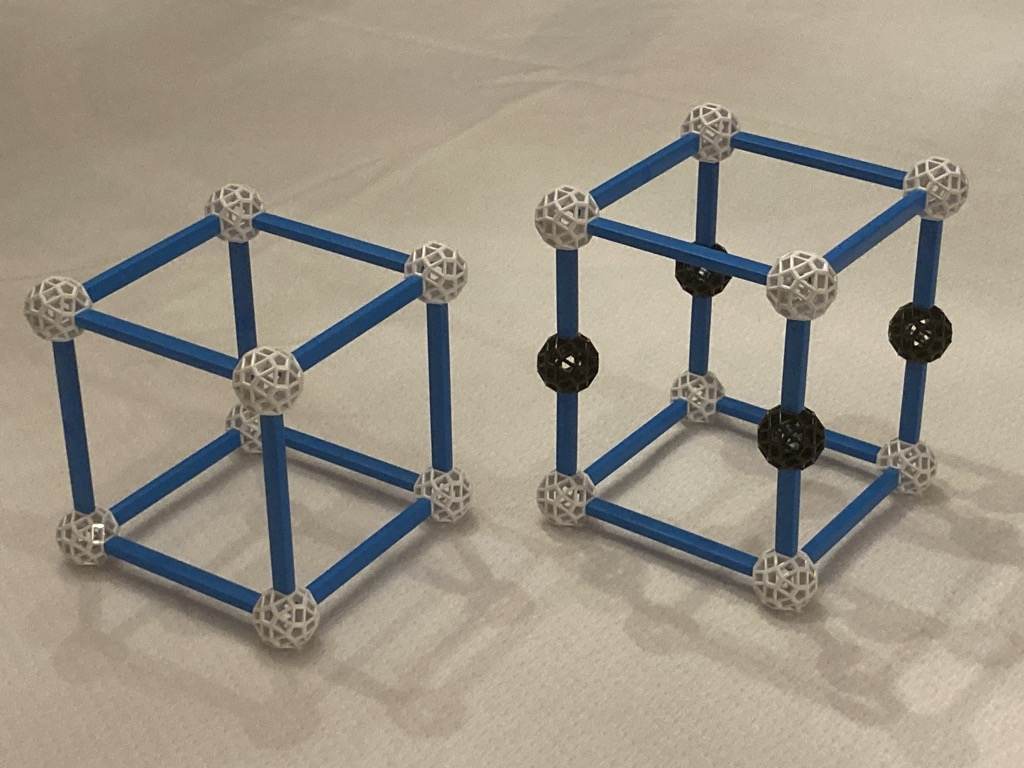
A cube before and after distending the vertical edges
Then, two new directions are chosen to replace the direction that just got extended. These new directions are shown in yellow:
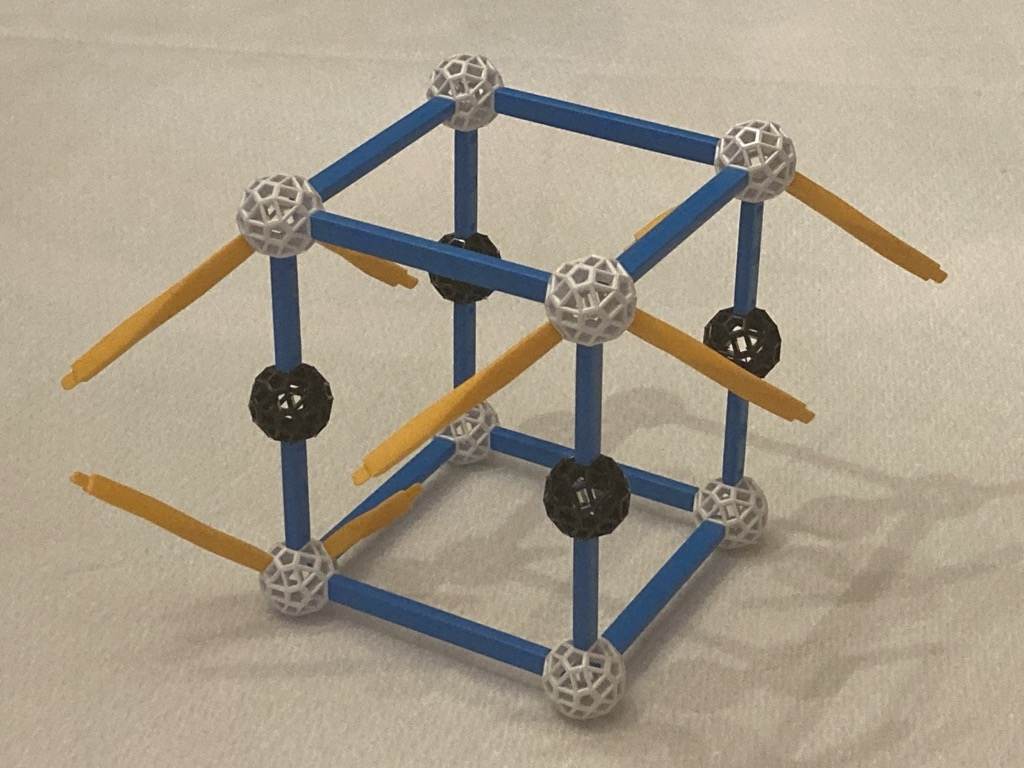
New edges in yellow
The short yellow edges extend inside the existing cube volume, so these edges will not be added. The long yellow lines are OK, and are kept.
The result is a three-zone dodecahedron:
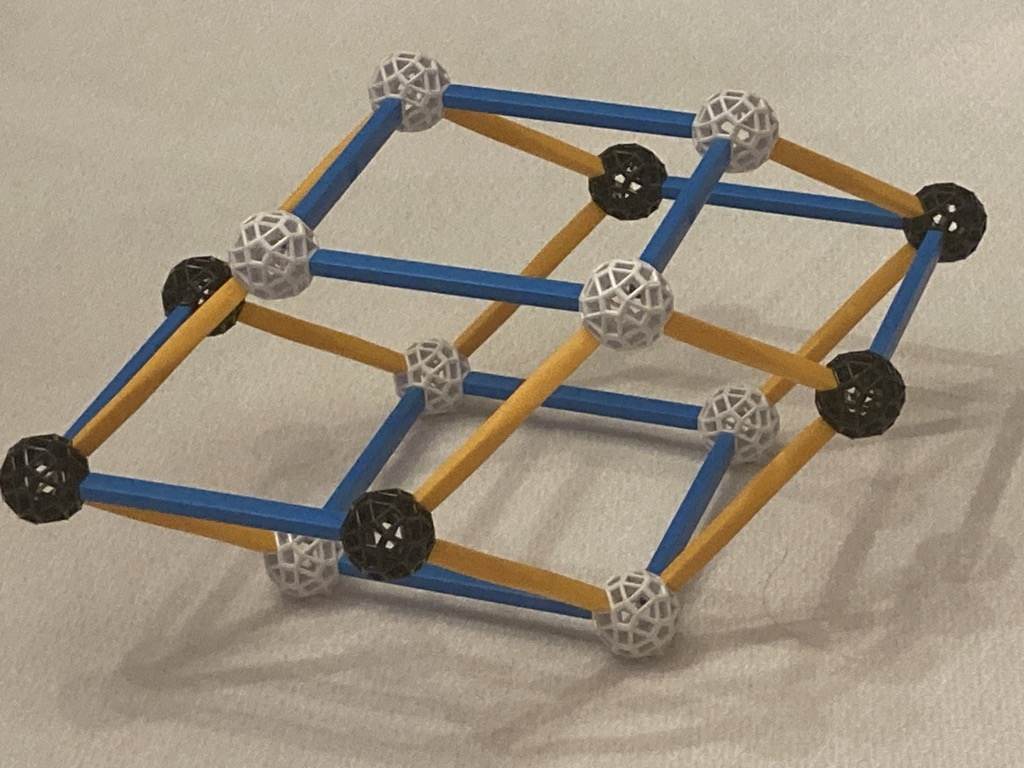
Finished augmentation, now with three bands
This exercise can be repeated as many times as you want, each time replacing an old set of edges with two new sets of edges. In all cases, one should maintain a convex shape. Different edge directions, usually signified here by different colours, produce results with more or less symmetry.
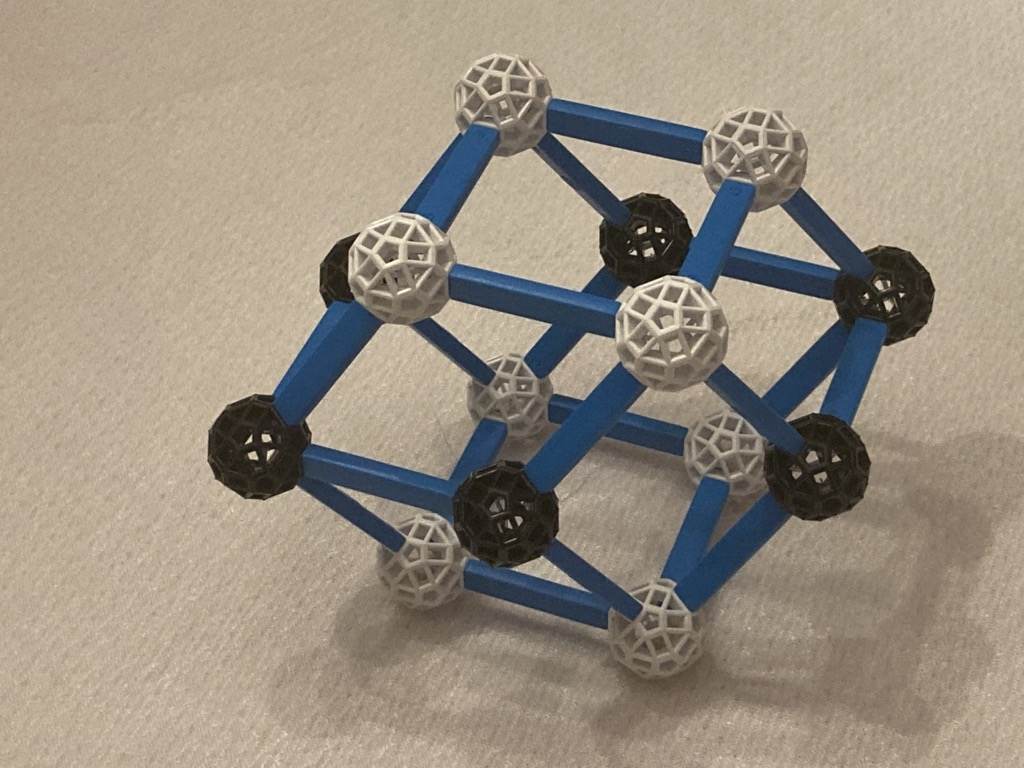
Adding two blue
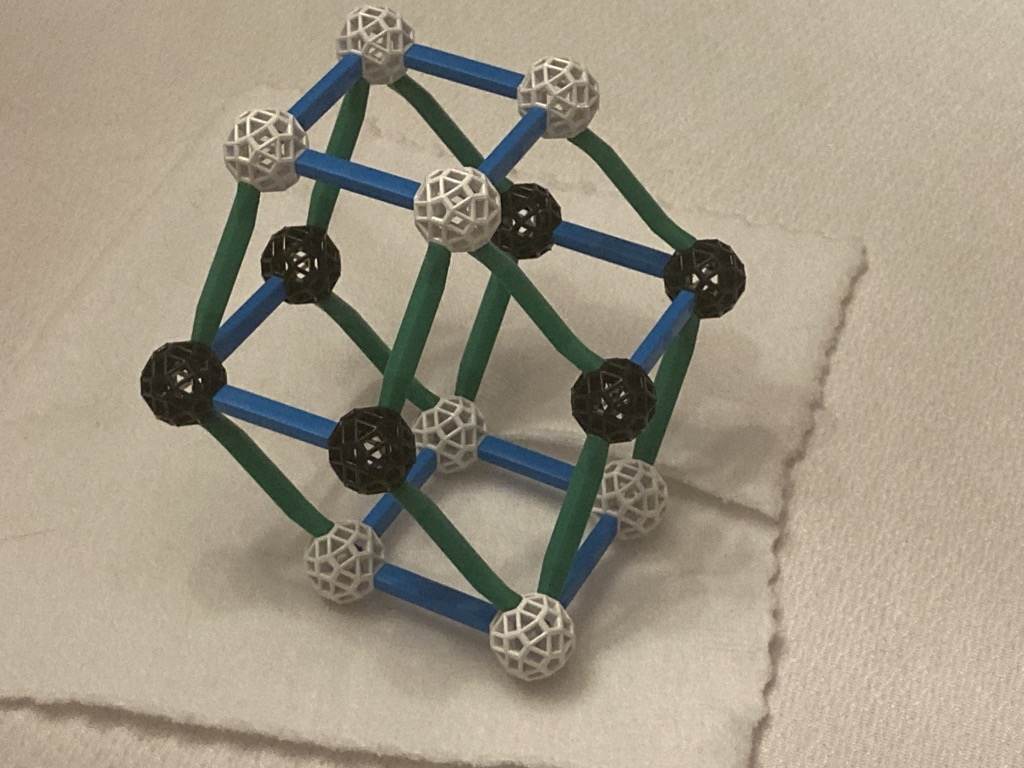
Adding two green
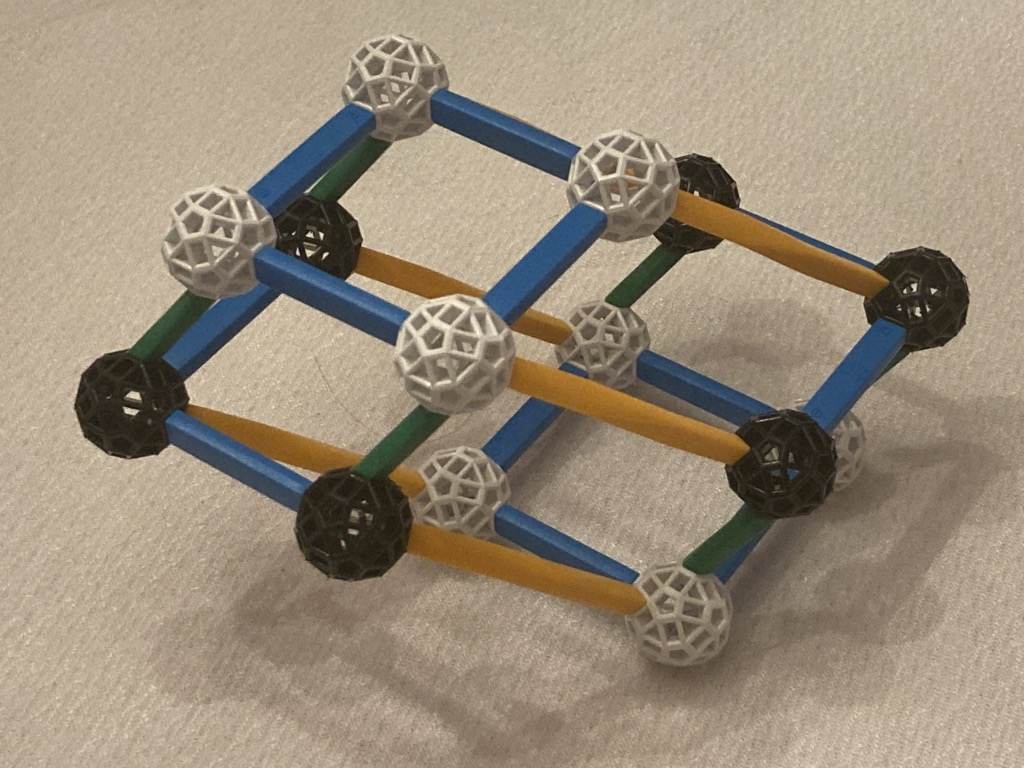
Adding one green and one yellow
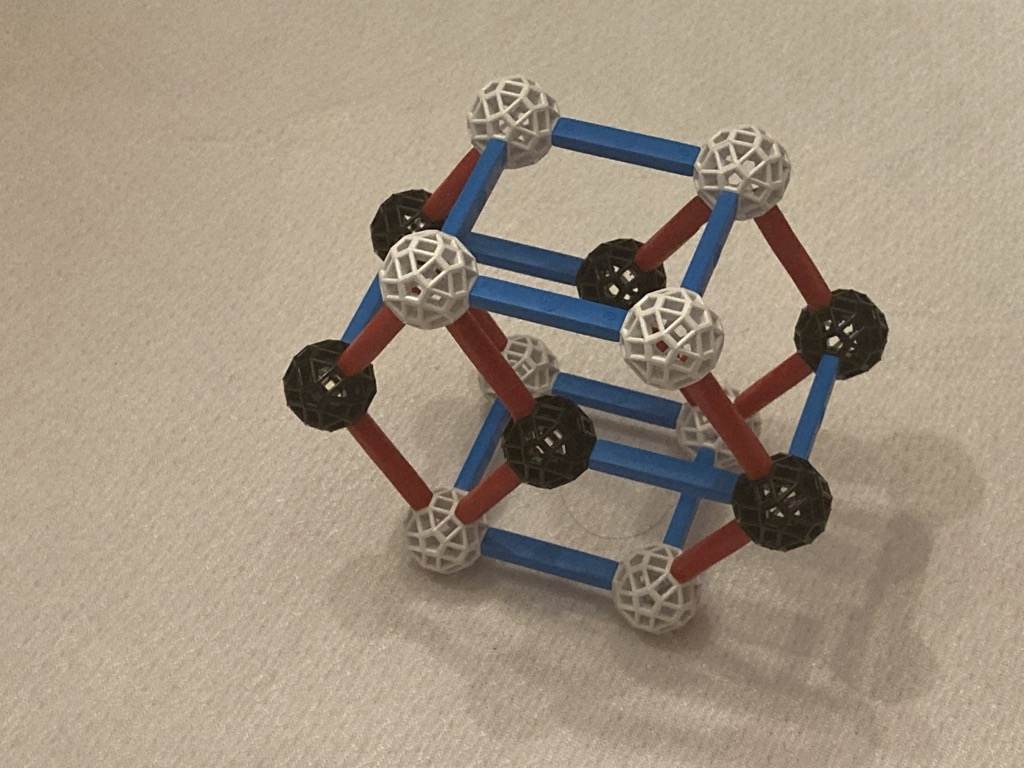
Adding two red (result has planar hexagons)
Notice
Challenge Yourself
Starting with a cube, see how many times you can "add a band" to make bigger polyhedra. At each step:
- The resulting polyhedron should remain convex. Try to avoid having two faces in the same plane!
- All faces will be parallelograms.
- All existing "bands" will gain two faces compared to what they had in the previous step.
Here are some statistics for polyhedra created in this way:
|
How many bands is the maximum possible using the standard Zometool directions while keeping the result completely convex?
Polyhedra, Zometool, and Geometry Index
This page was written in the "embarrassingly readable" markup language RHTF, and was last updated on 2024 Apr 10.
 s.27
s.27