Management (glossary entry)
This is a discussion of how the manager-worker relationship fits into the larger scheme of multi-level enfranchisement. For the sake of this discussion the person doing a job is called the worker and the person they reports to, the manager. (Matters concerning personnell management are discussed here.)
Note: As with my discussion of teams, the following discussion on management is somewhat slanted towards the strengths of the four masculine archetypes. However, with some rewriting it could be adapted to place emphasis on the feminine, or to be equally balanced.
Individual
To be a good manager one should have a strong and coherent set of core values. My own core values, outlined here illustrate the idea. The first five are particularly relevant to a manager's individual development, the middle five to their relationship with the people they interact with directly, and the final five to their role within the organization as a whole.
Hiring; Qualification; Mismatch
Here hiring also refers to the act of accepting a volunteer for a job, even when there is no pay or other compensation involved.
The effectiveness of the worker depends on the degree to which their strengths and passions match the qualifications and purpose of the job. (Expecting a person to be able to do any job, no matter how defined, is an example of perfectionism).
To the fullest extent necessary, communication should occur to discover how good the match is. This includes supplying a comprehensive job description, and interviewing the candidate to determine their skills and interests.
In volunteer jobs it is typical for the manager to accept whoever volunteers, with little effort spent on interview or qualification. In this instance, they will often discover that there is a poor match. If the manager is more committed to the results, they will find a better candidate. If they are more committed to teaching the current worker (a common objective in all-volunteer organizations) they can keep the volunteer they currently have.
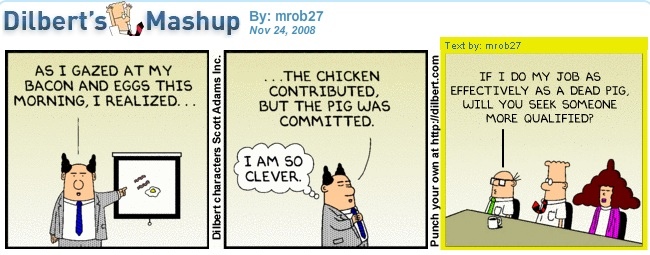
Commitment and mismatched assignments
Relationship
It is up to the worker and the manager to come to agreement on what specifically is entailed by the commitment to the job. These decisions are usually determined by weighing priorities between specific tasks and goals, the project purpose, and the overall mission of the organization. As I already mentioned, better productivity will result when these match up with the worker's strengths, passions and life purpose.
The balance of how much each worker contributes to the decisions, and who gets the last word, will depend on whether the manager is a micro-manager or a hands-off manager.
Most micro-managers will have a more endorsement-based style of relationship. They will spend more time telling the worker how they think it should be done.
Hands-off managers will tend toward the affinity-based style, by spending most of their time listening to what the worker thinks.
Neither style is "best", and this is an example of a larger political trade-off between collectivism and individualism. Like most political trade-offs, the choice of management style will often be rooted in the culture of a community or organization. Changing circumstances can cause variations: for example, a micro-management style might be more appealing when orchestrated, central control is needed, as when a team project enters a critical state (rushed schedule, unanticipated changes in external conditions, new direction given by higher management, etc.). When such conditions are not present, hands-off management can usually allow better utilization of everyone's skills and energy.
Credits
Scott Adams' Dilbert has more to teach about management than a hundred years at Harvard Business School.
Most of this material started with the E0812 ExM change in late November 2008. Moreau, Shapiro, Santana and Young all deserve about equal credit for helping me notice the principles and how they relate to one another.
This page was written in the "embarrassingly readable" markup language RHTF, and was last updated on 2025 Jul 14.
 s.32
s.32